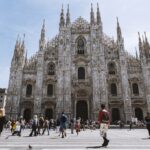
In recent years, the way we travel has been changing deeply.

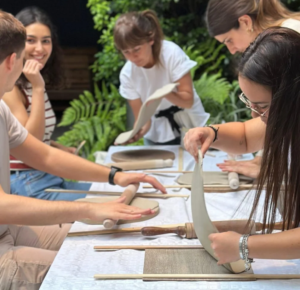
Imagine this scene: you walk into a museum and find it almost empty. Just a few steps away, a small café–workshop is packed with people taking part in a ceramic class, shaping tea cups with their own hands. The question comes naturally: today, is a handmade cup more important than an internationally famous sculpture?

The answer, of course, depends on personal interests. But one thing is certain: the way we travel is changing. More and more often, we choose experiences that truly involve us, that make us feel part of what we’re living. Perhaps we no longer identify with the role of “tourist,” but instead seek authentic, slow, place-rooted experiences. We want to understand how a city lives, not just what there is to see.

This is where the arts of the past come back into focus—not as nostalgia, but as a response to a contemporary need for truth, craftsmanship, and memory.

True craftsmanship—made of repeated gestures, long timelines, and knowledge passed down through generations—is becoming a new way to read and understand a place. We notice it too, in the smiles of those who try something authentic and out of the ordinary: a different way to connect with the soul of a city like Milan, which behind its modern, fast-paced image hides a living network of ancient traditions.

Sewing and Tailoring

Seeing the Art of Clothing Up Close

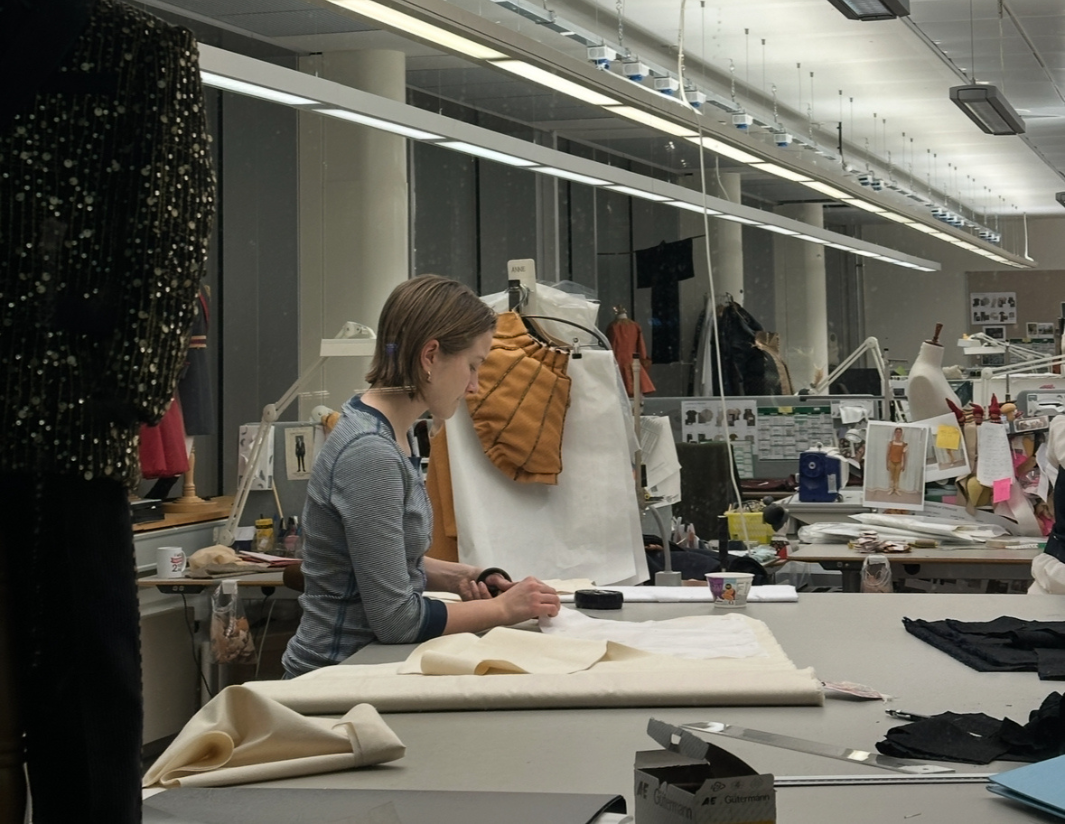
There was a time when sewing was a daily necessity. Grandmothers mended, adjusted, and created. Today, those same gestures are coming back—not out of need, but by choice. Sewing, tailoring, even home crochet speak of care, attention, and uniqueness.

It’s impossible not to think of school aprons sewn at home, thick winter socks, or clothes made for dolls. Maybe it’s also a desire to feel like children again, to return to a slower, more intimate dimension. These gestures are deeply tied to memory, to who we once were.

Stepping into an atelier means witnessing the birth of a garment, understanding how much precision and patience go into a perfect stitch. In a city like Milan, the capital of fashion, this return to the origins feels even more powerful: haute couture lives side by side with domestic handcrafts, now more sought-after than ever. And we love being among the few who can help people experience this authenticity in a city that—if anyone knows fashion—surely does.

Ceramics

Touching History with Your Hands

For those used to painting or drawing, ceramics are a surprising detour. They are three-dimensional, imperfect, physical. They force you to slow down, to feel the material, to accept that not everything can be controlled.

Vases, plates, and everyday objects become witnesses of an ancient story made of kilns, clay, glazes, and trial and error. Working with clay means creating something that lasts, something that’s used, something that enters daily life.
It’s a tactile art that more and more people are drawn to—even if it means “getting your hands dirty.” And yes, we’re willing to do that if it means not going home with the usual memories.

Culinary Traditions and Local Food

Learning by Cooking, Not Just Tasting

Food is one of the first languages through which a culture tells its story. But today, sitting at the table is no longer enough. There’s a growing desire to get hands-on, to understand where recipes come from, why they exist, and what they say about families and neighborhoods.

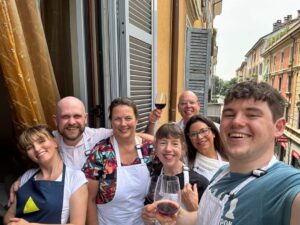
In Milan, this means rediscovering italian cuisine explained the way a grandmother would: slowly, generously, with little unwritten secrets. Cooking classes become moments of exchange rather than performance. You cook together, listen to stories, and recognize in everyday gestures a cultural heritage that was at risk of being lost.
And let’s be honest—the ending is always the best part: eating what you’ve just cooked with your own hands.



Preserving Tradition Is Also a Way of Traveling

The arts of the past are not coming back by chance. They’re returning because they answer a deep need: to reconnect, to feel part of a place, even if only for a few days. Not by chance, even the idea of a “relaxing holiday” is changing. Today, rest doesn’t necessarily mean doing nothing — it often means learning something new, slowly and with pleasure. This is where the concept of skillcation comes in: vacations where art, craft, and hands-on creativity naturally find their place alongside rest. A ceramic class in the afternoon, a cooking lesson instead of a spa treatment, a few hours spent learning an ancient gesture rather than lying by the pool. Art quietly enters our holidays not as an obligation, but as a gentle companion — something that relaxes the mind, engages the hands, and leaves us feeling richer than when we arrived.

It’s a philosophy we deeply believe in. As travelers first—long before being storytellers of experiences—we know what truly makes a journey unique. And today, more than ever, we want to keep sharing that feeling with our guests 🙂

In this new way of exploring the world, tradition is no longer something to observe from a distance, but something to experience firsthand. And perhaps this is where travel finds its most authentic meaning again: not collecting places, but creating connections.

We look forward to welcoming you with FollowMi Around. 🙂 Write to us at info@followmiaround.com